
Naval ensign of the Batavian Republic (1795-1806)

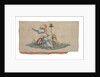
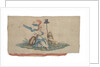
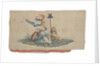
Image information
Sizing information
| Overall size (inc frame) | x cm ( x in) |
| Depth | cm (in) |
| Artwork | x cm ( x in) |
| Border (mount) |
cm
top/bottom
(in)
cm left/right (in) |
| The paper size of our wall art shipped from the US is sized to the nearest inch. | |

Naval ensign of the Batavian Republic (1795-1806)
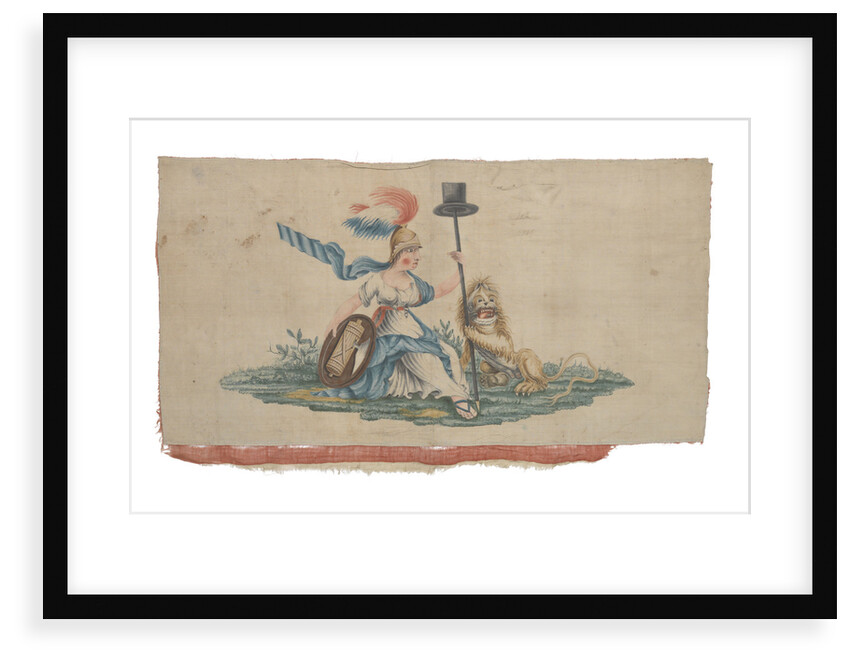
Part of a naval ensign of the Batavian Republic, this pattern in use 1795-1806. The ensign is said to have been captured during the Walcheren Campaign. The canton is the only remaining part. It is made of linen, with remnants of the hand sewn, horizontally striped red, white and blue, wool ensign attached. Painted in oil based colours on a white ground is the figure of Liberty, seated, holding a shield depicting the fasces in her right hand and in her left a staff with a hat on top. The lion of the Netherlands supports the staff from the other side.
The Batavian Republic was a French protectorate with a system of government based on the French model. This is reflected in the symbolism of the flag design. In 1806 Napoleon installed his brother as ruler of a new Kingdom of Holland and the design went out of use.
During 1809 Napoleon was gathering a fleet Antwerp and also at the Dutch port of Flushing on the island of Walcheren. The Admiralty decided to seize the mouth of the Scheldt and take or destroy the French ships before they could leave port. A large expeditionary force was assembled, but the French fleet under Rear-Admiral Missiessy, having been forewarned of the attack, withdrew up river. The island of Walcheren was occupied by the British and Flushing captured. It was then decided that the enterprise should be abandoned as there seemed no prospect of successfully taking the primary objective ├½Ôûê├ï Antwerp, and British forces had been weakened by a combination of diseases. Walcheren was evacuated in December after the basin, arsenal and sea-defences had been blown up.
The provenance of the flag is via Julia M. Lamb the granddaughter of John Lamb who she said: 'took charge of HMS Powerful at Walcheren 28 July 1809'. ADM37/786 (Powerful's muster book) states that Lieutenant John Lamb was transferred from HMS 'Agincourt' on 25 May 1809 and discharged when the ship paid off on 16 September. He was employed as a pilot. The fleet sailed on the 28th July from the Downs, the 'Powerful' being employed in troop transport duties during the Walcheren expedition. John's son Thomas is listed in the 1841 census as being resident in Deal with Jemima Lamb aged 60 (probably his mother) and employed as a 'mariner'. Pilotage was an importance source of employment in Deal.
Original size: 1041 mm x 1854 mm
- Image reference: L0152
- National Maritime Museum, Greenwich, London
Discover more
More by this artist
Search for similar images
Product images of Naval ensign of the Batavian Republic (1795-1806)




Our framed prints
Every framed picture is created by hand in our workshop by specialist framers.
Black, white, brown, silver, gold or natural frames available, supplied ready to hang.
All our frames have a smooth satin finish, and measure 20mm (front face) by 23mm (depth from wall).
Read more about our framed art prints.
Manufactured in the UK
All products are printed in the UK, using the latest digital presses and a giclée printmaking process.
We only use premium branded inks, and colours are independently verified to last between 100 and 200 years.
Delivery & returns
We print everything to order so delivery times may vary but all framed pictures are despatched within 5-7 days via courier or recorded mail.
Due to the coronovirus pandemic and Brexit situation, current shipping times may be longer, particularly for destinations outside the UK.
Delivery to the UK is £10 for a single framed print.
We will happily replace your order if everything isn’t 100% perfect.