
Dr John Harness (1754-1818)
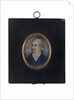

Image information
Sizing information
| Overall size (inc frame) | x cm ( x in) |
| Depth | cm (in) |
| Artwork | x cm ( x in) |
| Border (mount) |
cm
top/bottom
(in)
cm left/right (in) |
| The paper size of our wall art shipped from the US is sized to the nearest inch. | |

Dr John Harness (1754-1818)
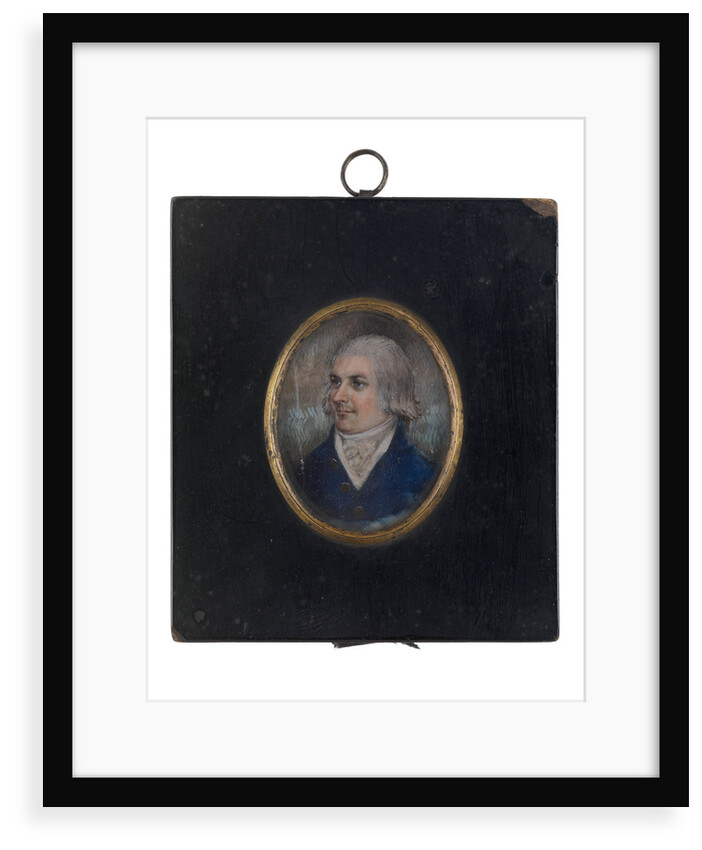
Oval miniature in watercolour on ivory, in a gilt metal oval mount set into a rectangular black wooden backing board, with a suspension ring. A semi-legible inscription on the reverse is in fact: 'Dr Harness, Upper Berkeley Street, Portman Square', his address when elected to the Linnaean Society in February 1809, but from which he resigned in a letter from St Albans in February 1818. He is shown head and part shoulders, looking to his left with a slightly smiling expression, wearing a blue coat with brass buttons and white waistcoat, shirt and neck cloth. His grey hair is worn straight and long over his ears, possibly with a queue behind, and his eyes appear to be grey or hazel. The likeness is well done, though a little rough, perhaps partly from paint deterioration.
Harness was a naval physician and surgeon, born in London on 15 November 1754. He initially trained with his doctor grandfather, John Foote Harness, then finished under Dr Saunders at St George's Hospital and the surgeon, Mr Else, at St Thomas's. He was a young friend of Lord Spencer who suggested he enter naval or army service and in December 1776 was appointed assistant surgeon of the 'Sylph', Captain Richard Dacres, bound for Antigua. Here he transferred to the station flagship 'Portland' and was then appointed assistant surgeon ashore in the naval hospital. In 1778 he was promoted to surgeon by local order. What followed to 1793 is not yet known, but by then he was a surgeon at the Royal Naval Hospital, Haslar, and raising a growing family at Wickham, Hants. In that year he went to the Mediterranean as physician to Admiral Lord Hood's Toulon expedition, during which he pioneered the use of 'citrid acid' (lemon juice) against scurvy. From 1816, when Sir Gilbert Blane
- Image reference: F9525
- National Maritime Museum, Greenwich, London
Discover more
More by this artist
Search for similar images
Product images of Dr John Harness (1754-1818)




Our framed prints
Every framed picture is created by hand in our workshop by specialist framers.
Black, white, brown, silver, gold or natural frames available, supplied ready to hang.
All our frames have a smooth satin finish, and measure 20mm (front face) by 23mm (depth from wall).
Read more about our framed art prints.
Manufactured in the UK
All products are printed in the UK, using the latest digital presses and a giclée printmaking process.
We only use premium branded inks, and colours are independently verified to last between 100 and 200 years.
Delivery & returns
We print everything to order so delivery times may vary but all framed pictures are despatched within 5-7 days via courier or recorded mail.
Due to the coronovirus pandemic and Brexit situation, current shipping times may be longer, particularly for destinations outside the UK.
Delivery to the UK is £10 for a single framed print.
We will happily replace your order if everything isn’t 100% perfect.